


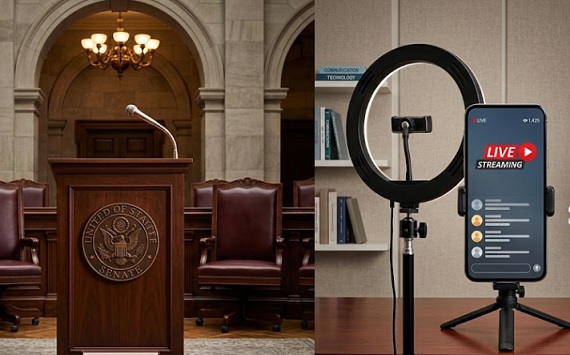
The Philippine Senate has lately felt less like a chamber for careful lawmaking and more like a nonstop live-streamed spectacle.
Instead of relying on formal floor speeches and bound-by-procedure committee exchanges, many high-profile senators now speak directly to the public through Facebook Live from their private offices. Where once colleagues interrogated and challenged each other in person, they now trade accusations and challenges in real time on social platforms, trading parliamentary restraint for viral moments.
You may asked, Why senators prefer livestreams to the floor? This shift is deliberate, not accidental. In a country with intense online engagement, livestreams offer three clear advantages that explain why some senators opt out of traditional parliamentary channels:
First, direct narrative control. On the Senate floor, speeches are open to immediate questioning and correction by peers. A livestream allows a senator to present a polished, one-sided account without those on-the-record interruptions. The only immediate responses come from followers and online commenters, not constitutionally empowered colleagues.
Second, instant amplification. Social media moves faster than committee schedules. When a leadership row or procedural fight breaks out, broadcasting to followers lets a politician frame events before the newsroom cycle catches up. Platforms reward emotional, confrontational content, which quickly converts into widespread visibility.
And third, populist optics. Appearing unfiltered on camera creates an impression of intimacy and accessibility for many younger, digitally native voters. Livestreams let politicians bypass traditional gatekeepers and cultivate a personal bond with supporters, even when the performance is carefully scripted.
When major policy positions or accusations are delivered via personal feeds rather than debated in the plenary, the collective, deliberative nature of a lawmaking body erodes. Laws should be hammered out through reasoned exchange among equals, not declared in solo broadcasts.
Watching procedural breakdowns and leadership disputes play out as online drama risks teaching a new generation that politics is primarily theatrical. That can breed cynicism about institutions whose legitimacy depends on steady, rule-bound processes.
As online audience, seeing senators go live doesn’t mean you should stop caring. It means you should be more skeptical.
Ask why the livestream was chosen. If a senator speaks emotionally about an investigation or a vote online, consider whether the aim is to persuade the public, rally supporters, or sidestep formal scrutiny.
Check official journals, committee reports, and reputable coverage to understand the full context.
Slow down. Social feeds reward immediate outrage. Pause before you share, look for verification, and consider long-term policy consequences rather than the moment’s drama.
Social media has made the Senate more visible than ever. That can be a civic benefit if it supplements and not substitutes to formal places where law is made. Citizens should enjoy easier access to their representatives, but also insist that the serious work of governance remain rooted in the constitutional processes designed for collective, accountable decision-making.